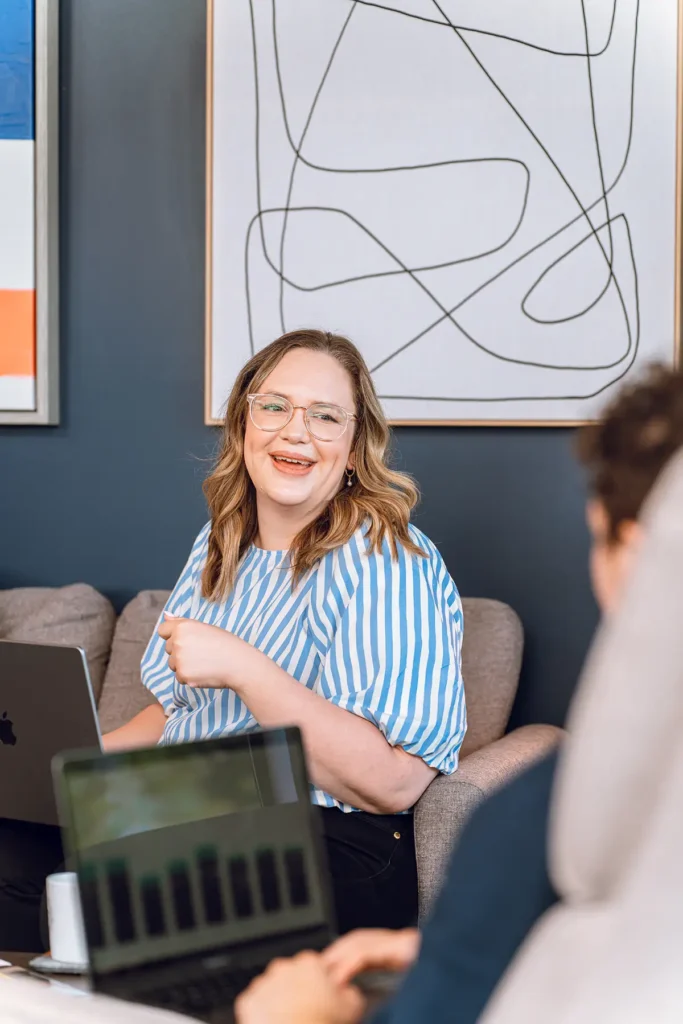




Because people aren’t just looking for a service, they’re looking for a place where they feel at home.
The senior living decision is never just transactional, and your community is not a hotel or an Airbnb. Your audience is made up of real families navigating a difficult and often emotionally taxing transition. Whether someone’s browsing for themselves or researching for a loved one, when they land on your website, they’re carrying questions, concerns, and sometimes a heavy heart. They want to feel welcomed, not won over. Your job? Make the digital experience feel human, helpful, and trustworthy. If your site can do that, it’s no longer a marketing tool. It’s part of the care.
Here are 10 website features every senior living community needs to offer a genuine experience:
1. Mobile-Responsive Design
Mobile is a given. Whether it’s an adult daughter researching between errands or a senior browsing an iPad after lunch, your website needs to be accessible. But mobile-friendly doesn’t just mean things resize. It means tap-friendly buttons, text that doesn’t require zooming to be readable, and forms that won’t inspire despair.
When we design, we don’t just ask, “Does this fit?” We ask, “Does this feel easy?” Because if the mobile experience is frustrating, your website isn’t serving a large percentage of its users.
2. Accessibility That Prioritizes Ease, Not Just Compliance
Contrast is a big deal, which is why we always get it right. But accessibility for older adults consists of more than that. It also involves:
- Font scaling that adjusts to different needs
- Screen reader compatibility through tools like AccessiBe
- Form fields with clear labels and proper focus states
- An interface that doesn’t overwhelm with motion or noise
Accessibility can’t be an afterthought. It should be baked in from the start. After all, ease of use is the first step toward trust.
3. Floor Plans That Do More Than Show Dimensions
Too many senior living websites treat floor plans like a download-and-hope moment. We don’t. We design clickable, easy-to-view layouts that show the type of care associated with each plan (e.g., Independent vs. Assisted). Viewers will quickly understand their options with the help of clear labels. They’ll easily envision their stay when they have the opportunity to see room features like kitchenettes, closets, private baths, and patios.
The goal is simple: help visitors picture themselves in your community, not fill out a form.
4. Navigation That Matches the Way Real People Think
Your site should be efficient, not labyrinthian. It’s not the place to get clever with labels or bury high-priority content. We build navigation that puts the essentials like Living Options, Floor Plans, Lifestyle, and Contact, front and center.
Because when people are in research mode, they don’t want to decode your website. They just want answers.
5. Local Attractions That Bring the Neighborhood to Life
One thing families always ask: “What’s nearby?”
That’s why we created a Local Attractions Widget, a dynamic section made to assuage safety concerns and place your community as somewhere inviting. It highlights nearby healthcare providers, dining and shopping spots, and local activities and recreation. These are features that both let users picture life outside their apartment and assure families that their loved one will be well-connected and cared for.
6. Sample Menus and Activity Calendars to Build Excitement
Senior living covers a host of things. It’s about care, yes, but it’s also about lifestyle. That’s why we always recommend showcasing weekly menus and activity calendars so prospective residents can say, “This feels like me.”
It’s in the name. You’ve built a senior living community, and we’re here to help families see that. Whether it’s chair yoga on Tuesday or roast turkey on Sunday, these simple additions paint a more vivid, livable picture than paragraphs ever could.
7. Real Stories and Real Photos
Stock images and vague taglines don’t build a connection; they create distance.
We prioritize authentic visuals that capture daily life inside the community. They give families access to real staff and resident interactions, treating them to a taste of the familiar, warm moments that make your communities feel like home.
People want to see who they’ll be living with, not just the amenities they’ll get.
8. Testimonials That Feel Honest
You can illustrate your community’s care, connectedness, and warmth, but it means more coming from someone who’s lived it. We bring in real testimonials from residents and families, paired with images, and back them up with trust-building signals like:
- Affiliation logos
- Third-party awards
- Longevity (“Serving families since 1998”)
- Number of communities operated
Trust doesn’t grow out of emotion alone. It’s also built on evidence. With the right details, you’ll cultivate both.
9. A Clear, Human-Focused User Journey
One of the biggest mistakes we see? Websites that prioritize brand goals over user needs.
Overloaded forms. Pushy popups. CTAs that show up before someone even understands what you offer.
We flip that. Our strategy is simple: Start with research. Understand the mindset of your users. Design an experience that leads them calmly to the next step. When a website honors the decision-making process without rushing it, that’s when people lean in.
10. A Website That’s Built Around Your Community, Not Just Your Brand
Too many senior living sites feel like they came off a corporate conveyor belt. Same layout. Same voice. Same stock photos. Different logo. But families aren’t looking for “senior living” in general; they’re looking for your community. The one that’s close to home. The one that fits their lifestyle. The one that just feels right. That’s why we make sure each community gets its own dedicated website, not just a subpage under the corporate umbrella. Why? Because local identity matters. It builds trust. And it gives each location the space to showcase what makes them special.
We start each project with a UX and brand audit, talk directly with stakeholders, and shape the site around the voice and personality of that specific community. While we often collaborate with corporate teams, our long-term goal is to work closely with individual locations, because that’s where the real story lives.
Lastly, a Website That Feels Like a Welcome
Senior living decisions are hard, and it doesn’t make sense for your website to make them harder. Instead, it should reassure and inform. It should give the sense that, without ever saying it directly, you’re in the right place.
We build websites that reflect that kind of care because we believe the digital experience is part of the service. And when your website honors your residents the way your staff does? That’s when people feel ready to take the next step.